DICGC Deposit Insurance Guide: ₹5 लाख Cover, Bank Branches, FD और Interest के नियम NEW
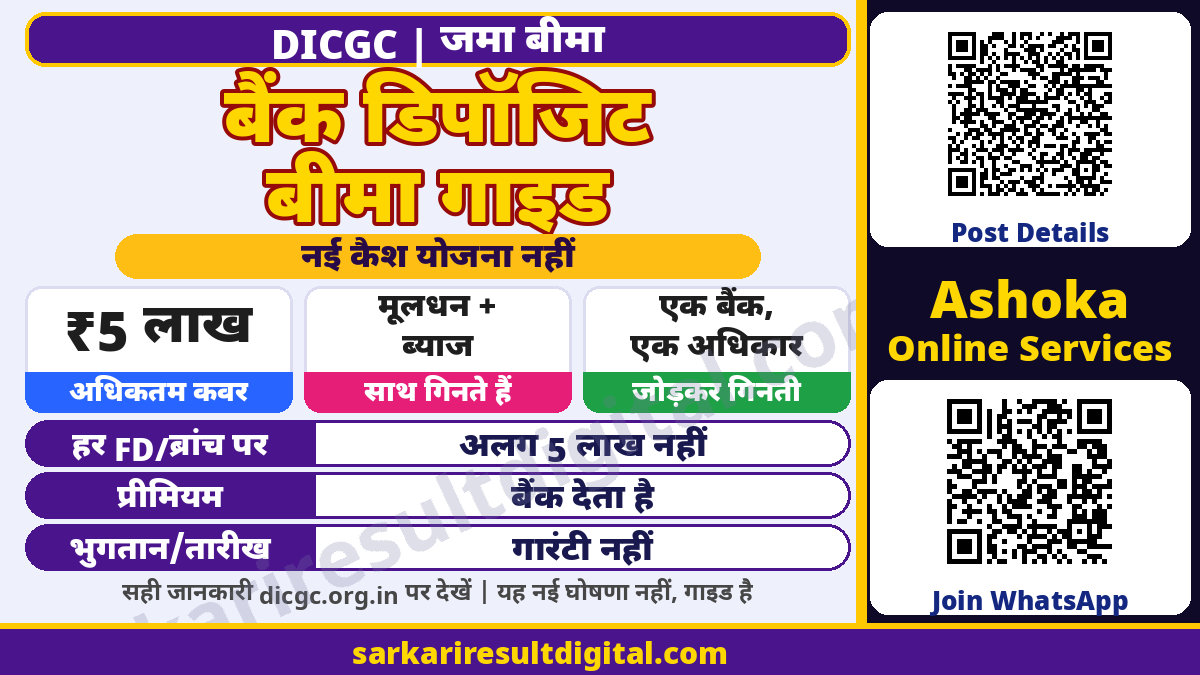
8 नवंबर 2026 को आधिकारिक स्रोतों से तैयार सेवा-गाइड: यह नई योजना, नई समय-सीमा या लाभ की घोषणा नहीं है। यह eligible bank deposits की insurance limit समझने की गाइड है, ₹5 लाख का नया cash benefit या हर व्यक्ति को मिलने वाली सरकारी राशि नहीं। किसी खास bank की financial safety या आपके individual claim की पुष्टि यहां नहीं की गई है।
₹5 लाख की सीमा का सही मतलब
DICGC के current depositor FAQ के अनुसार एक depositor के एक bank में “same right and same capacity” में रखे eligible deposits पर principal और interest मिलाकर अधिकतम ₹5,00,000 तक insurance होता है। यह हर savings account, हर FD या हर branch के लिए अलग-अलग ₹5 लाख नहीं है। Applicable event/cut-off date और insurance rules के आधार पर admissible amount तय होता है।
Deposit insurance को investment return, unlimited government guarantee या जब चाहें withdraw कर लेने वाली रकम न समझें। Claim के लिए bank की applicable स्थिति और official process जरूरी हैं।
किस स्थिति में कैसे गिनें?
| स्थिति | सामान्य नियम |
| एक bank, कई branches | Same right/capacity वाले eligible balances जोड़ें |
| Savings और कई FD एक bank में | अलग account numbers से limit अलग नहीं हो जाती |
| Principal और interest | दोनों मिलाकर अधिकतम ₹5 लाख |
| अलग-अलग banks | हर bank पर limit अलग लागू होती है |
| Joint/different capacity | Ownership/right/capacity की official classification जरूरी |
| Loans/dues | लागू dues के set-off के बाद admissible amount तय हो सकता है |
सरल उदाहरण: FD और savings
यदि एक व्यक्ति की उसी bank में, उसी right/capacity में savings ₹1 लाख और FD ₹4 लाख है, तो principal ही ₹5 लाख हो गया। Accrued interest जोड़कर कुल इससे ऊपर हो तो cover की ceiling अपने-आप नहीं बढ़ती। यह सामान्य illustration है, किसी actual bank claim का calculation नहीं।
Official FAQ का उदाहरण ₹4,95,000 principal और ₹4,000 accrued interest का कुल ₹4,99,000 insured बताता है। वहीं principal ही ₹5 लाख हो तो उसके ऊपर interest ceiling से अधिक होगा। इसी वजह से केवल FD receipt की principal राशि देखकर cover न गिनें।
कौन-से deposits और institutions?
FAQ savings, fixed, current और recurring deposits जैसे bank deposits का उल्लेख करता है। साथ ही foreign governments, Central/State governments, inter-bank deposits, India के बाहर received deposits और specifically exempted deposits जैसी exclusions भी बताता है। किसी product पर सिर्फ “investment” लिखा होने से वह insured bank deposit नहीं बनता।
Commercial banks और covered cooperative banks के बारे में official FAQ पढ़ें। Primary cooperative societies को FAQ insured नहीं बताता। Bank और cooperative society को एक न मानें। अपने bank की insured स्थिति DICGC की current information तथा branch official से verify करें; इस guide ने किसी specific institution की registration जांच नहीं की है।
Joint account और अलग capacity में सावधानी
अलग right/capacity के deposits को rules के अनुसार अलग cover मिल सकता है, लेकिन सिर्फ account का नाम या branch बदलने से यह निष्कर्ष न निकालें। Official FAQ में guardian, trustee, firm और joint accounts के examples हैं। Same persons के same order वाले multiple joint accounts को जोड़ने का नियम भी दिया गया है।
Sole proprietorship concern और उसी sole proprietor के individual deposits FAQ के अनुसार aggregate किए जाते हैं। Complex ownership या joint holding के case में official examples पढ़कर bank से classification की पुष्टि लें। यह article cover बढ़ाने के लिए account structure बदलने की व्यक्तिगत सलाह नहीं है।

छह practical checks
- DICGC official FAQ और अपने bank की insured status information पढ़ें।
- उसी bank की सभी branches में अपने savings/current/FD/RD records इकट्ठे करें।
- किस deposit का same right/capacity में aggregation होगा, bank से स्पष्ट करें।
- Principal के साथ applicable accrued interest और dues/set-off का प्रभाव समझें।
- यदि bank पर official restriction/liquidation जैसी स्थिति हो तो उसी bank का current notice पढ़ें।
- Applicable bank/administrator/liquidator route से documents और claim/reference की पुष्टि करें; कोई guaranteed payout date न मानें।
Premium कौन देता है?
Official FAQ बताता है कि deposit insurance premium insured bank देता है। DICGC के 2024-25 information leaflet में इसे depositor पर pass on नहीं करने की बात भी है। किसी caller द्वारा “insurance activate” या “₹5 लाख release” करने के नाम पर personal payment मांगना इस guide से authorized नहीं होता। Official notice और bank contact स्वतंत्र रूप से जांचें।
Claim और सामान्य withdrawal अलग हैं
Liquidation में liquidator depositor-wise claim list तैयार करता है; DICGC scrutiny और admissible amount की प्रक्रिया के बाद payment liquidator route से होती है। Merger/reconstruction या RBI All-Inclusive Directions के मामलों की प्रक्रिया अलग हो सकती है। केवल online complaint या FD maturity होने से DICGC claim अपने-आप नहीं बनता।
AID वाले insured bank में FAQ CEO/administrator के माध्यम से signed willingness form और identity के officially valid documents की attested copies देने को कहता है। Applicable bank का current notice और document list देखें। यहां कोई claim form submit नहीं किया गया है और कोई bank-specific deadline या payout schedule verified नहीं है। 90-day statutory framework को हर depositor के लिए बिना शर्त cash guarantee की तरह न लें; required lists/data और eligibility पर official provisions लागू हैं।

Claim तैयारी की checklist
- Bank का exact legal name, branch और account/deposit records रखें।
- Savings/FD/RD तथा ownership details को एक जगह लिखें।
- Bank statement, deposit receipts और relevant communication सुरक्षित रखें।
- Applicable notice के अनुसार identity, willingness form या claim-related documents तैयार करें।
- Official acknowledgement/reference लें; OTP/PIN/password किसी agent को न दें।
- Unrelated scheme subsidy या unclaimed deposit search को deposit insurance claim न समझें।
अक्सर पूछे जाने वाले प्रश्न
क्या हर FD पर अलग ₹5 लाख है?
नहीं। Same bank, same right/capacity वाले eligible deposits aggregate होते हैं।
क्या दूसरी branch से limit बढ़ती है?
नहीं, उसी bank की branches के deposits जोड़े जाते हैं।
क्या interest भी cover में है?
हां, लेकिन principal और interest मिलाकर maximum limit लागू होती है।
क्या अलग banks अलग insured हैं?
FAQ के अनुसार हर bank पर coverage limit अलग लागू होती है।
क्या ₹5 लाख सबको मिलने वाला benefit है?
नहीं। यह eligible deposits की insurance ceiling है, universal cash scheme नहीं।
क्या यह किसी bank में पैसा रखने की सलाह है?
नहीं। यह general insurance-rule guide है, individual financial advice नहीं।
आधिकारिक स्रोत
Current bank-specific notice, applicable law और official instructions को प्राथमिकता दें।